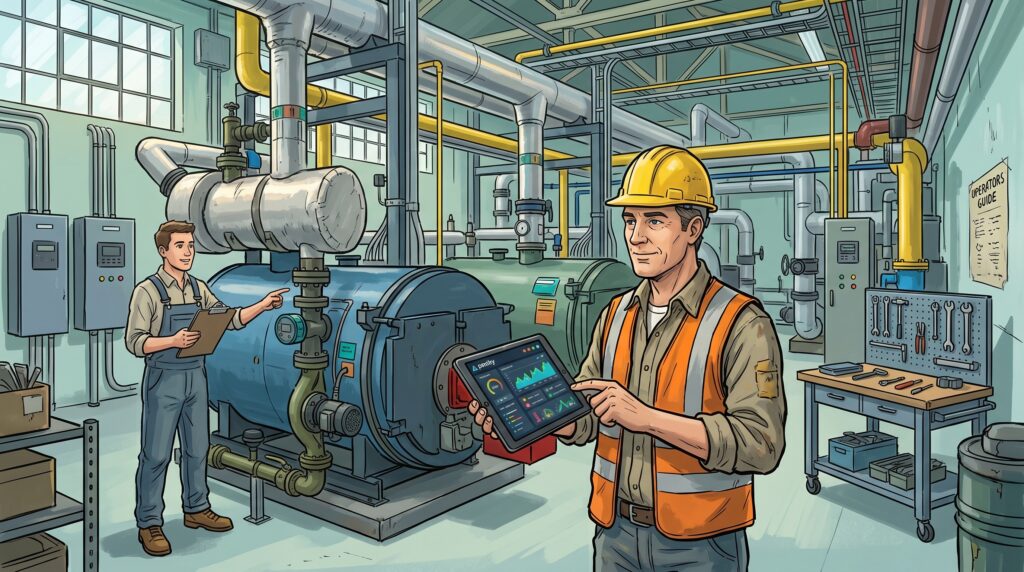
For most building operators, “morning rounds” are a rite of passage.
It usually involves a trek through mechanical rooms, sub-basements, and rooftops, hoping no “check engine” lights appeared overnight.
This fragmented approach to building operations is an inconvenience and a drain on your most valuable resource: time.
To stay ahead, forward-thinking operators are leveraging technology to bridge the gap between aging hardware and modern demand without adding more work to their plates.
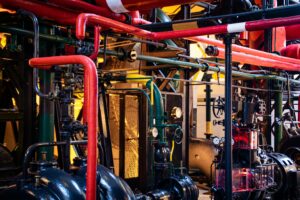
Image source: Pexels
The Problem: Islands of Data
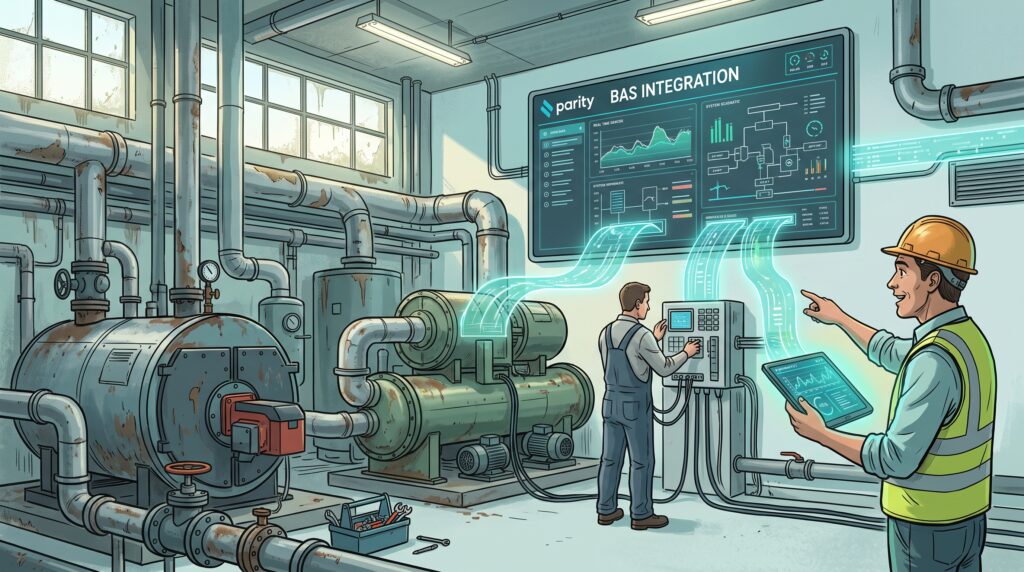
While many modern buildings use a Building Management System (BMS) to centralize their equipment, the day-to-day reality for an operator is far from seamless.
In many cases, the BMS serves as static data of building operations rather than a tool for active management.
Even with a BMS in place, operators still face significant hurdles:
Why Data Centralization is a Game-Changer for Building Operators
When your systems are centralized, you move from firefighting to intervention. Alerts enable a technician to fix a pump at 2:00AM before tenants even realize there is an issue.
This shift is the cornerstone of building operator efficiency, allowing staff to focus on high-priority tasks rather than routine “status checks”.
For operators managing multiple buildings, the single-pane concept scales well. You can toggle between an apartment complex in Brooklyn and a high-rise rental in Midtown on the same screen.
This allows regional managers to see exactly what is happening across their entire portfolio without having to drive across town.
Beyond the energy savings, having all your data in one place makes daily reporting and tracking effortless.
You get the benefits of lower utility costs and better sustainability, but the real win is the convenience. You have the data you need to make decisions, right at your fingertips.
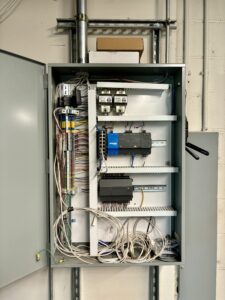
Parity’s Pi in Action at 75 Wall Street
In February 2024, a Parity alert detected low Domestic Hot Water (DWH) temperatures at this 42-story building with 253 hotel rooms and 346 apartments.
Maintaining consistent hot water temperatures is critical for resident comfort and building operations. When temperatures dropped below the expected threshold, Parity’s monitoring and alerting platform automatically generated an alert and notified the on-site building team.
With early visibility into the issue, the team was able to investigate and service the unit quickly, restoring normal operations and preventing extended downtime or resident discomfort.
In March 2024, another Parity alert indicated that the exhaust fans were no longer operating properly.
Ventilation systems play a key role in maintaining healthy indoor conditions. The alert enabled the on-site team to quickly diagnose the issue and replace the failed fans before they caused larger ventilation or air quality problems.
The Power of a Unified HVAC Management Platform
At Parity, we believe you shouldn’t have to be in five places at once to know your building is healthy.
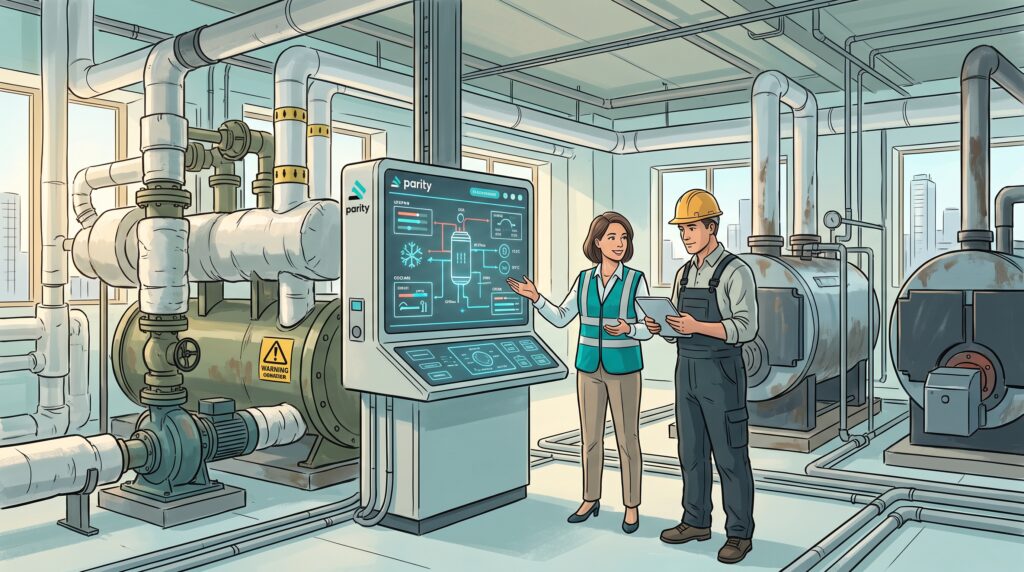
Our Pi dashboard provides a single pane of glass to view your HVAC systems.
Every critical component – from the central plant to a small auxiliary pump – is visible in real-time.
What makes Pi unique is its inclusivity. While Parity’s services aim to reduce energy consumption and carbon emissions in multifamily buildings and hotels, we recognize that operators need to see the whole picture.
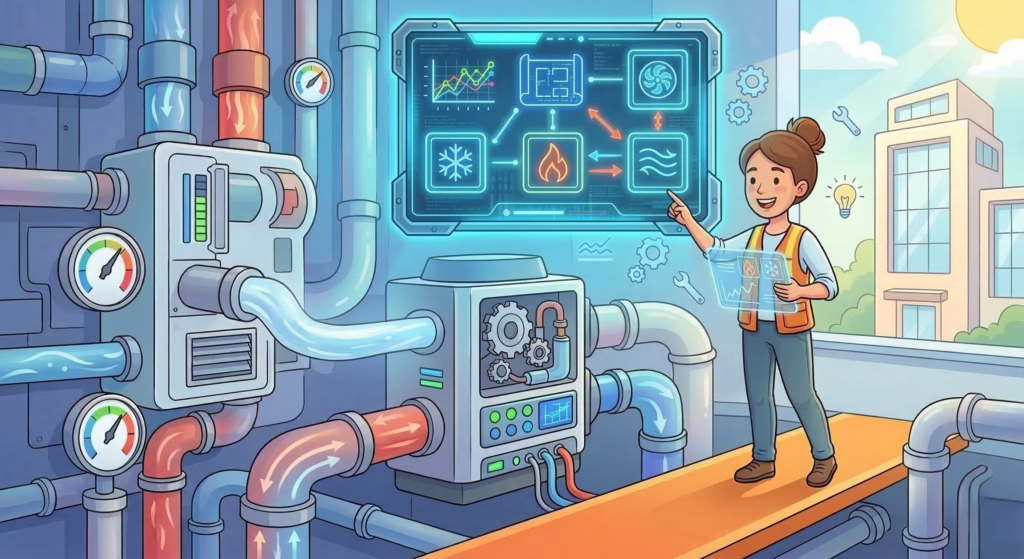
Even if we aren’t optimizing a system, we can add it to Pi to provide full visibility.
If a system goes down, whether we optimize it or not, you get real-time HVAC monitoring and alerts – no more surprises.
To learn more about how Parity’s HVAC Optimization and Pi interface can ease your day-to-day operations, contact contact@paritygo.com or call 1-833-372-7489.