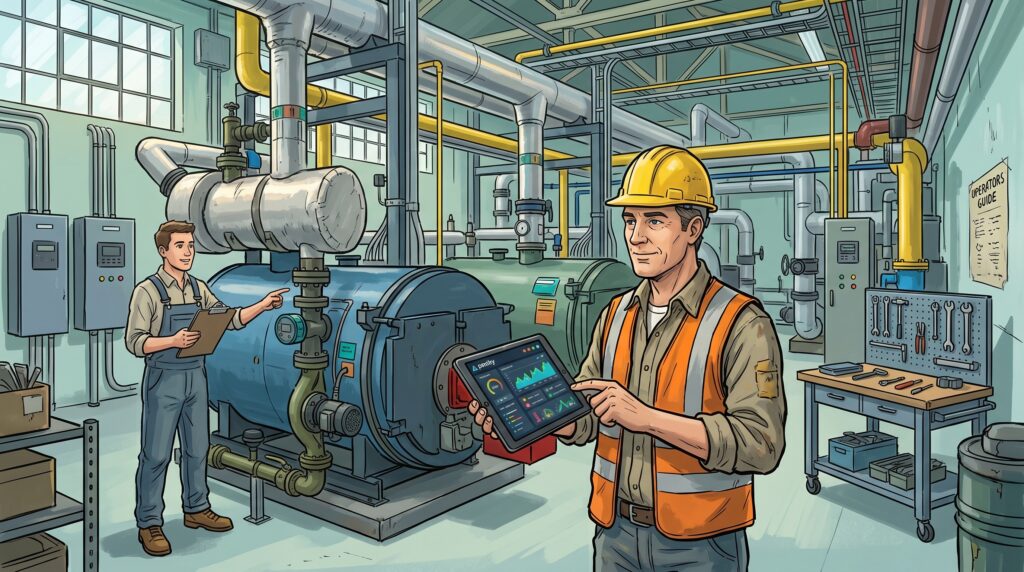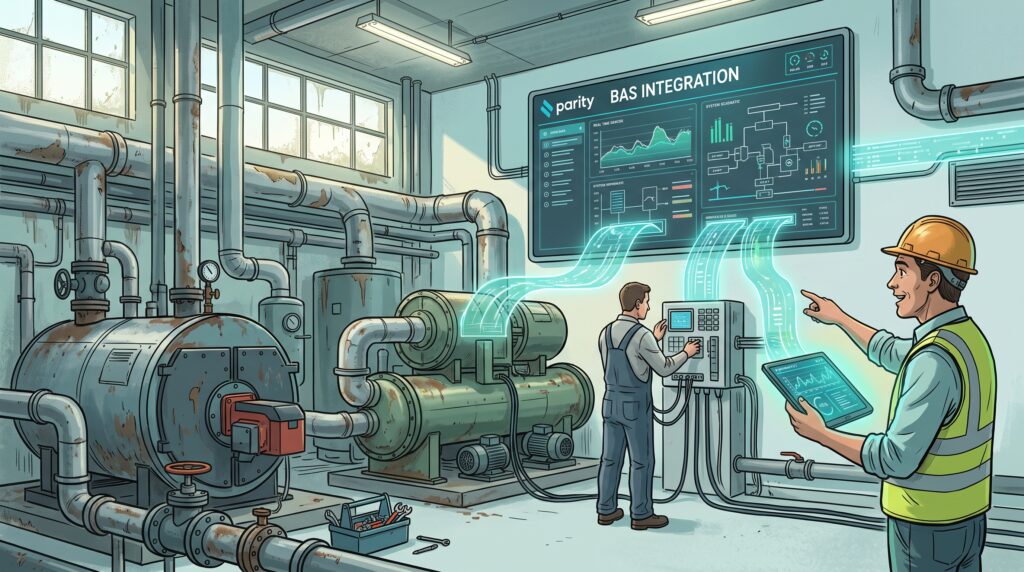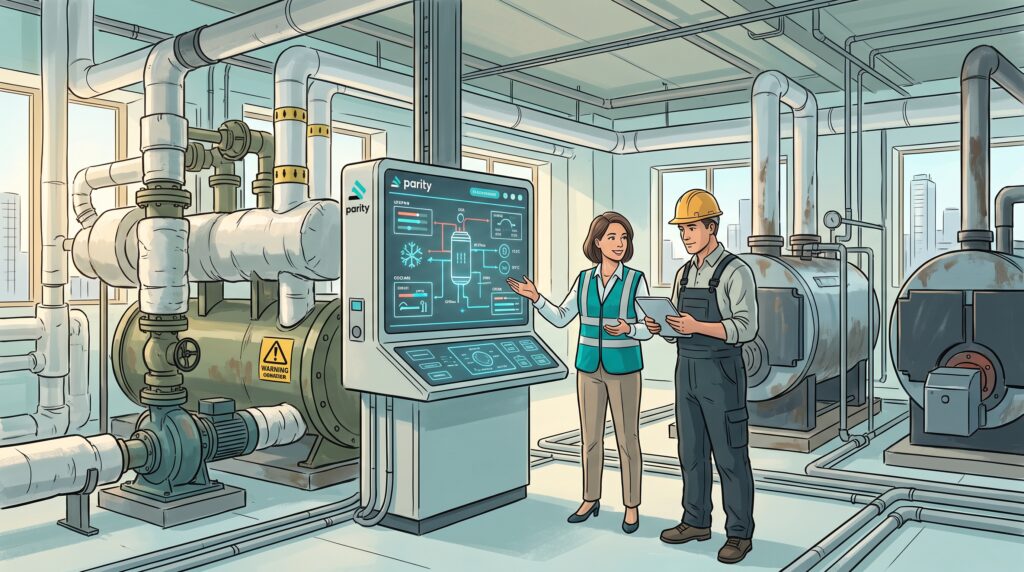

Have you opened any apps today?
By the time you read this, chances are you’ve already toggled between a handful, either on your phone or your computer.
The beauty of modern technology is that the world is right at your fingertips.
But imagine if every single app on your phone or laptop required a proprietary piece of hardware. A thumb drive or cord that allows the application to connect and run.
It’s safe to say that it would be a hassle, and people would be angry.
Hardware without software is becoming a nuisance, especially if it’s proprietary.
When it comes to real estate owners and operators, we seem to still be in denial about software vs hardware.
During discussions about decarbonization and future-proofing property’s bottom lines against rising utility costs, building owners and operators are still considering a six or seven-figure mechanical upgrade when equipment is still well within its useful asset life.
Even worse is when a company convinces you that the only way to upgrade your existing systems is by buying into their proprietary hardware and therefore, only their service.
A digital overhaul of your existing systems shouldn’t require the installation of proprietary hardware that chains you to one vendor’s ecosystem.
What happens if the service (which is arguably the most critical component) falls off? If there’s a change in service terms? Or price hikes?
You’re tied-down and have already sunk the cost into the hardware so switching will be like restarting.

Image Source: Pexels.com
True savviness comes from adopting open source/non-proprietary hardware and having the freedom to choose your service provider.
HVAC systems are the biggest driver of a building’s carbon emissions, and contribute the most to a property’s energy costs; upwards of 40% of operating budgets.
Inefficient HVAC systems lead to tenant complaints and higher energy and maintenance costs, while increasing the likelihood of contributing to penalties for excess carbon emissions.
HVAC optimization software is a key driver for decarbonization and energy savings, while maintaining resident and guest comfort.
However, HVAC optimization that uses proprietary hardware without providing the option to switch providers, or without a guarantee behind performance claims, is a big gamble.
Proprietary hardware makes building staff helpless in the operations of their own buildings. If a system needs to be manually overridden, you’re dependent on the vendor to make changes.
Also, if the system underperforms or causes tenant discomfort, it will impact how people feel about your property, its management, and, in the long term, the ability to fill those occupancies.
Furthermore, hardware depreciates. When considering long-term solutions to HVAC optimization, don’t get caught up in the web of having to consistently upgrade a vendor’s proprietary system to continue benefitting from their services.
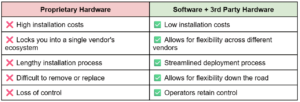
Table: Comparing Proprietary Hardware and Software + 3rd Party Hardware
Ultimately, proprietary systems are expensive, restrictive, and nearly impossible to integrate with other systems.
Building owners and operators should be able to adjust their building without waiting for a vendor to approve it. Or relying on your hardware vendor’s software.
Building owners and operators are facing huge competition in the multifamily and hotel space. Changes need to be made quickly, and there’s no time for multi-year hardware projects or vendor-locked retrofits.
Multifamily and hotel buildings need a solution that’s quick, inexpensive, and feasible for the short and long term.
At Parity, we work with your existing HVAC systems – no proprietary hardware or forced upgrades. Instead, you retain flexibility and control while reducing energy costs and carbon emissions.
For example, across 3 AvalonBay buildings, we achieved $540,000 in utility cost savings, $290,000 in reduced LL97 fine exposure (while preventing 1,000+ tons of CO2 emissions), and earned $30,000 in demand response revenue.
There was no proprietary hardware or commitment to a closed system.
We optimized their existing systems and achieved substantial energy savings.
To learn more about how Parity’s HVAC optimization service can help achieve utility cost savings and reach decarbonization goals, contact contact@paritygo.com or call 1-833-372-7489.