Are you managing your HVAC systems, or chasing them?
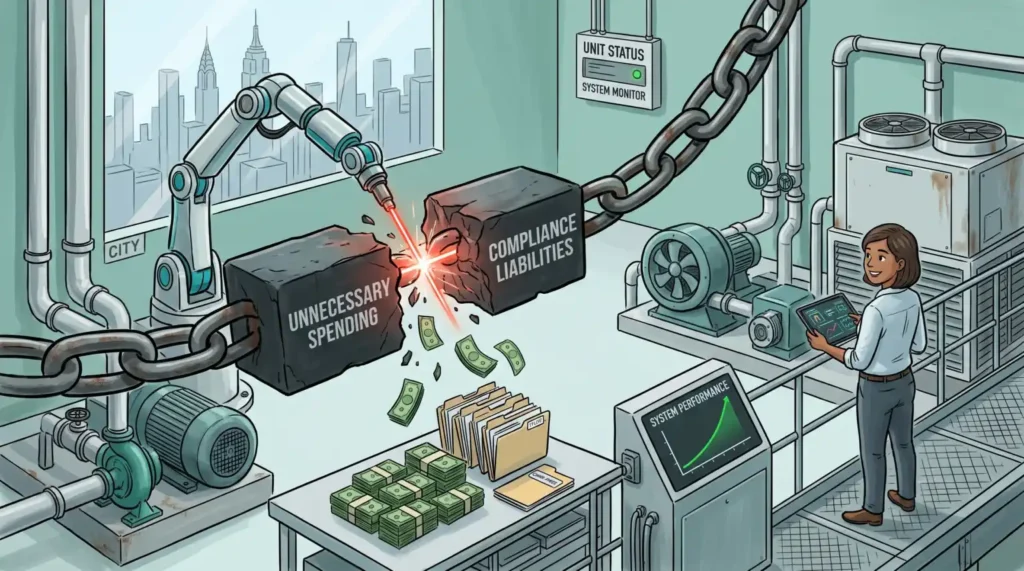
For most building operations teams, the day is a running battle: utility costs swing with the weather, a Local Law 97 (LL97) deadline gets closer and stricter every year, there’s the constant tug-of-war between cutting energy use and keeping residents comfortable.
Handle all of it by hand and something always slips – usually the energy efficiency you were trying to protect.
AI for HVAC changes the terms of that fight.
It reads your equipment data, the weather forecast, and real-time energy prices, then adjusts your systems automatically, trimming waste without touching comfort.
With Parity, that can be 20-30% in energy cost savings, guaranteed.
AI for HVAC is a set of smart algorithms that read data, from equipment sensors, weather forecasts, and energy markets, and use it to make the right operating decisions automatically, in real time.
That’s a bigger shift than it sounds.
A traditional Building Management System (BMS) follows static rules: run this pump on this schedule, hold this setpoint, and react when someone complains.
These building energy management systems do exactly what they were programmed to do last year, whether or not that still fits today’s weather, occupancy, or energy prices.
AI flips that model from reactive to proactive.
It notices that a cold front is coming and pre-adjusts. It sees that electricity is about to spike and shifts load before it does. It learns how your building actually behaves, how fast a wing loses heat, when demand peaks, and tunes itself around that reality.
The equipment in your mechanical room stays the same. What changes is how intelligently it runs.
For a multifamily building or hotel, that means smart buildings without new hardware: the same boilers, chillers, and pumps, now guided by software that treats efficiency as the goal rather than an afterthought.
That is where data analysis stops being a report you read and starts being a decision that gets made for you.
The advantages of AI in HVAC fall into three buckets that matter to an operator’s bottom line.
AI-powered control minimizes energy consumption by optimizing start/stop times, matching output to real-time demand, and shaving waste your team would never have time to catch by hand.
Across multifamily buildings and hotels, Parity typically reduces an average of 20–30% out in energy consumption. In a line item as large as HVAC, that delta reshapes your operating budget.
AI-powered monitoring watches equipment performance continuously and flags anomalies before they become failures.
Fault detection this early means less downtime, fewer costly repairs, and equipment that lasts longer because it never gets run into the ground.
For a manager, it also means the maintenance calendar stops being a guess: you service what the data says needs servicing, not what the calendar assumes.
Savings mean nothing if residents are too hot or too cold. AI helps hold temperatures steady across the building. No more hot upper floors and freezing lobbies. It can optimize ventilation for better Indoor Air Quality (IAQ) without burning energy to do it.
Done right, occupant comfort goes up while consumption goes down, which reduces service calls from comfort complaints.
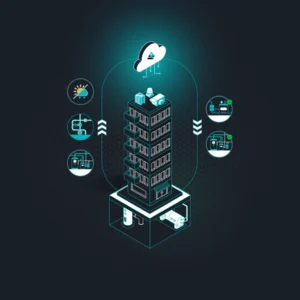
There’s a fourth benefit that often gets missed: new revenue.
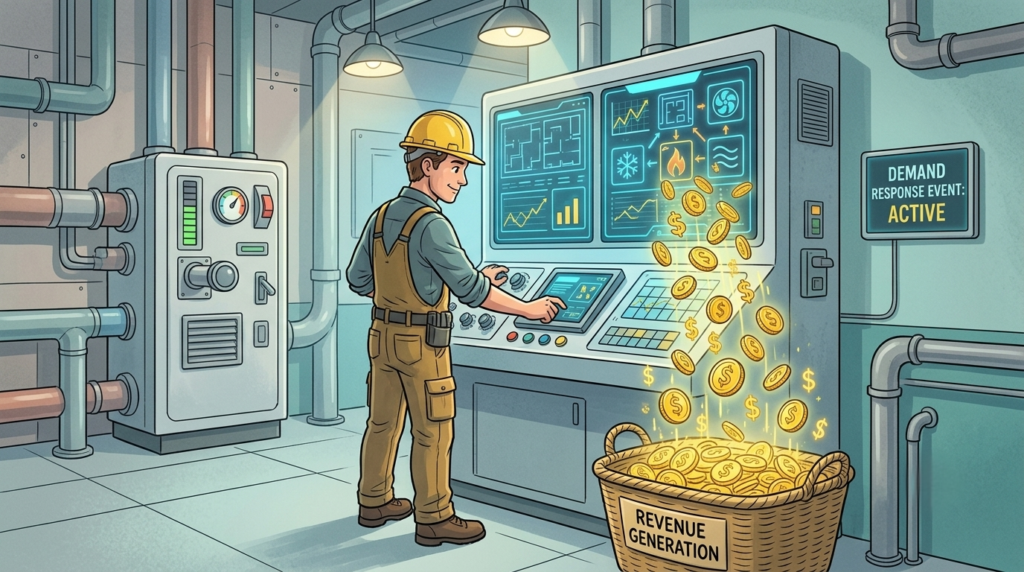
In many markets, AI can automate Demand Response (DR) which is when buildings curtail load during peak grid events in exchange for payments.
DR allows multifamily buildings and hotels to turn your HVAC from a pure cost center into a source of estimated revenue.
The through-line: AI doesn’t force a trade between cost and comfort. It removes the trade.
It squeezes waste out while protecting the resident experience, and it turns HVAC from a reactive headache into a controlled, predictable system, the kind you can actually plan a budget around, and even earn from.
Most competitors stop at “machine learning” and move on. Here’s what’s actually under the hood, in plain terms.
Machine Learning (ML) is pattern recognition. Feed a system enough data about how your building consumes energy by hour, season, or weather, and ML learns the patterns.
It can then spot when something’s off.
Reinforcement Learning (RL) is how the system gets better by trying approaches, seeing which ones save the most energy without hurting comfort, and reinforcing what works.
Over time it converges on operating strategies a human tuning things by hand would never have the hours to find.
Large Language Models (LLMs) and Retrieval-Augmented Generation (RAG) bring a different kind of power: language. RAG lets an AI tool pull answers from a specific, trusted body of documents rather than guessing.
Paired with an LLM, that means a technician can ask a plain-language question like “why is this unit short-cycling?” and get an answer grounded in the manufacturer’s manuals and the building’s own history, instantly, instead of digging through binders.
The real power comes from these working all together. ML establishes the baseline and spots the anomaly; RL figures out the most efficient response and keeps improving it; LLMs and RAG make the whole system legible to the people who run it.
That combination is what separates true optimization from a smart thermostat.
None of this requires you to become an AI expert.
These AI-powered technologies do the heavy analytical lifting so your systems run at their best and your people spend time where it counts.

So how do you actually put this in place?
Leveraging AI in your building is more straightforward than most managers expect.
A good provider assesses your existing systems and the data they already produce. The first job is capturing it. This is also where you find out what’s realistically possible in your building, rather than in a generic pitch.
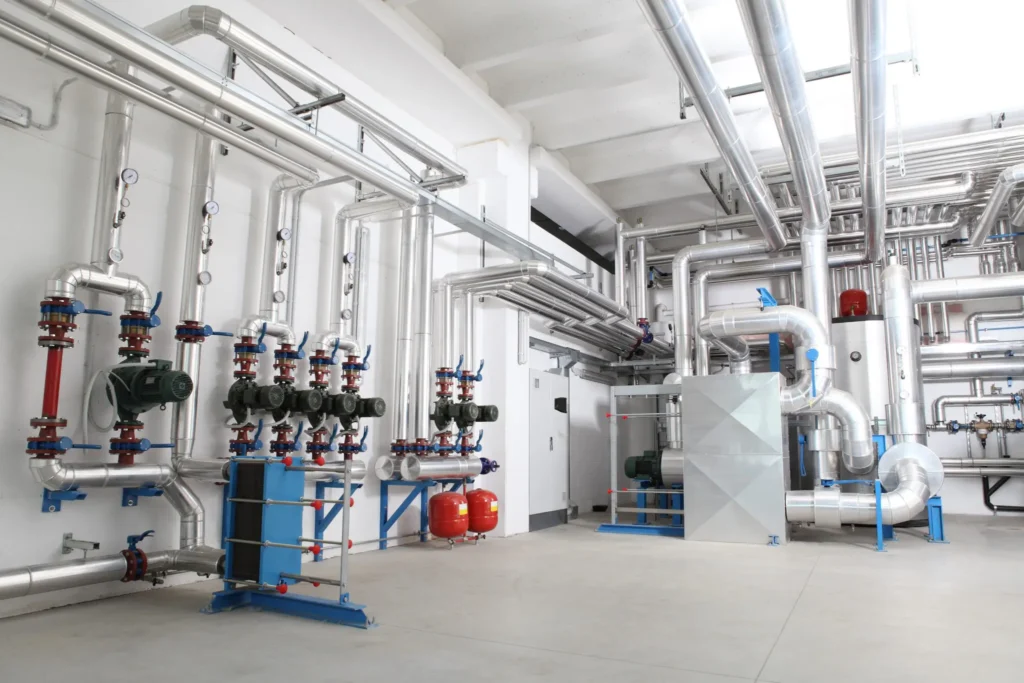
The best AI for HVAC builds on what you have. It connects to your existing BMS and sensors and adds a layer of intelligent control on top. No rip-and-replace, nothing installed inside units.
That keeps disruption low, skips the capital expense of new equipment, and means residents never notice the work happening. Installation is a matter of connection and configuration, not construction.
AI implementation on the traditional model asks for a large check up front and a leap of faith on the Return on Investment (ROI). That’s exactly the risk that stalls good projects on an owner’s desk.
There’s another model.
With Parity’s Optimizer, there’s options for zero upfront investment, and savings are guaranteed.
That flips the risk. Instead of betting capital on a projected return, you put proven optimization to work.
For a manager who has to defend every ROI analysis to an owner or board, a savings-funded model is about as de-risked as a decision gets.
Two fair questions come up whenever AI enters the building:
Is my building’s data safe? It should be. Reputable providers treat data privacy and cybersecurity with the same seriousness as any sensitive system: secure transmission, controlled access, and clear data-handling practices.
When you evaluate a partner, ask exactly how your data is stored, who can see it, and how it’s protected.
Will this replace my people? No. AI handles the tedious, around-the-clock data analysis no human can sustain: watching thousands of data points, catching drift, running the numbers at 3am.
That frees your HVAC technicians from the busywork and points them at what only skilled people can do like the complex physical repairs, the judgment calls, the strategic maintenance that keeps a building healthy.
In practice, AI tends to elevate the role. The technician who once spent hours hunting for a fault now gets an alert that names the likely cause, and spends that time fixing it instead of finding it.
Your team gains an extra set of eyes that never sleeps and the building benefits from machine-scale vigilance and human expertise.
That partnership is worth stressing to a nervous team.
AI is not a replacement, it’s a workforce upgrade; the same team, backed by better tools, delivering a better-run building.
The theory is convincing. The proof is better.
Consider a 24 floor, 288 rental multifamily building that came to Parity with a familiar set of problems: energy bills climbing year over year and a Local Law 97 penalty on the horizon with no clear plan to avoid the worst of both worlds.
Manual management had taken the building as far as it could go.
Parity’s AI-powered Optimizer went to work on the systems already in the building. No retrofits, nothing installed inside units.
The software took over the real-time control decisions; the Parity team handled the day-to-day tuning, working alongside on-site staff rather than around them.
The results?

Those are the quantifiable results: real energy savings, a fast ROI, and a compliance problem taken off the table.
This is what AI in HVAC looks like in a working multifamily building: not a projection on a slide, but a delivered outcome.
Here’s the takeaway: AI in HVAC is no longer a future trend.
It’s a current, working tool for running buildings, and the gap between operators who use AI and those who don’t is widening every season.
Proactive adoption is how you stay ahead of three pressures at once.
It keeps you competitive as energy costs stay volatile and unpredictable. It keeps you ahead of tightening building performance standards like Local Law 97/BERDO/BEPS, where the penalties only grow with each compliance period.
You don’t need to build an in-house AI team to get there. The most direct, lowest-risk path is to bring in a partner who has already done it, one that optimizes what’s in your mechanical rooms, guarantees the savings, and asks for nothing upfront.
That’s the Parity Optimizer: HVAC optimization that turns your largest controllable cost into a source of savings, compliance, and peace of mind, guaranteed.
Ready to see what your building could save? Book a free energy savings assessment and we’ll show you the number, before you commit to anything.
Contact us: contact@paritygo.com · 1-833-372-7489 · paritygo.com · Explore the Optimizer service · See how demand response adds revenue · Read on building performance standards.