
Advanced property technology (PropTech) solutions have historically been tailored towards commercial real estate like Class A office buildings. This is especially the case with operations and maintenance technology. Residential buildings and hotels have been lagging in the technology adoption curve primarily due to their distinctive operating characteristics.
Fault detection and diagnostics (FDD), alarming/alerting, and other tech solutions that support property operations can be difficult to apply to buildings that are continuously occupied, potentially understaffed, and have older HVAC systems. These buildings can often benefit from a solution that provides automated control adjustments to their HVAC systems, limiting the need for manual adjustments at all times of the day.
Adding fuel to the fire, an article published in Facilities Dive says, “The majority of tenant issues come down to comfort, with 66% of respondents saying it is their most common request, according to the firm’s survey of 236 property owners, facility managers, operation executives, and other commercial real estate professionals.”
The article later stated, “Sustainability initiatives and ESG reporting are also gaining attention from commercial property teams. The report notes that over the past three years, commercial property teams have continued to prioritize energy efficiency and expense reduction, with 64% planning to prioritize these issues in 2024.”
So, why should you care about PropTech solutions specifically built for residential buildings and hotels that target occupant comfort and sustainability?

Residential building and hotel staff should care about bringing advanced PropTech solutions into their properties for 4 reasons.
Now that you know why getting advanced technology into residential buildings and hotels matters and why you should care, let’s explain how Parity can help.
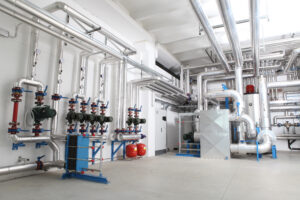
Unlike trophy commercial properties, multifamily residential buildings and hotels are continuously occupied, are more likely to be understaffed, and are more likely to lack advanced HVAC controls. Historically, the energy-focused PropTech market didn’t develop solutions that were customized to address these types of challenges in multifamily residential buildings and hotels.
This is the gap that Parity is filling. Our control optimization software and supporting Optimizer service are specifically designed for multifamily buildings and hotels.
Through integrating with a building’s existing HVAC controls, our Optimizer service remotely and automatically makes real-time control adjustments based on data from your building and external factors like weather forecasts. This minimizes energy consumption and reduces your staff’s workload while maintaining a comfortable building climate for your occupants.
Automated control adjustments open new opportunities for Demand Response and grid interactivity more generally. Parity automates demand response protocols to run during demand response events.
Also, Parity directly reduces CO2 emissions by improving your HVAC systems’ efficiency. We deliver automatic energy savings to potentially reduce your exposure to fines from building performance standards. As energy efficiency and greenhouse gas emissions regulations tighten, Parity opens new, low-cost opportunities for compliance.
Lastly, Parity are experts in proactive troubleshooting. Proactive troubleshooting allows building staff to solve things quickly if something goes wrong. If our service detects an operational anomaly with your equipment, we send color-coded alerts, tiered e-mails, and text messages to building staff as soon as the issue arises. Our service can identify issues in a building before your occupants are impacted.
If you want to learn more about how Parity is bringing advanced technology into the residential space, email contact@paritygo.com or call 1-833-372-7489. You can also visit our website to learn more about how we reduce utility bills in multifamily residential buildings and hotels.
Boston’s Building Emissions Reduction and Disclosure Ordinance (BERDO) is a building performance law that focuses on decarbonizing existing large buildings in Boston.
BERDO sets requirements for large buildings to reduce their greenhouse gas emissions gradually to net zero by 2050. Non-compliance could result in large fines.
The law only targets roughly 4% of buildings across the City of Boston, yet it will address over 60% of Boston’s emissions. This is an essential component of achieving Boston’s net zero goals.
BERDO encourages energy efficiency improvements, fuel switching, retrofits, and renewable energy generation in local buildings. These improvements can increase resident comfort, improve indoor air quality, reduce outdoor air pollution, and direct further investments into building a low-carbon and equitable Boston.
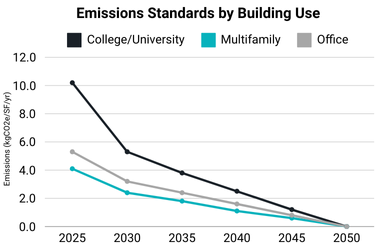
Not complying with BERDO can be costly. There are 3 different non-compliance fines that can be handed out to buildings.

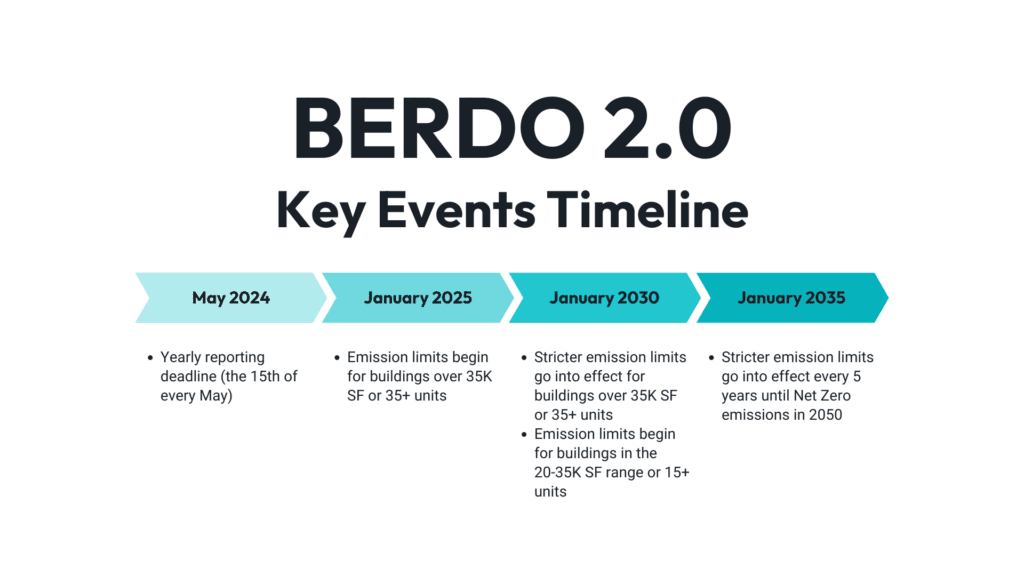
Cameron Rapoport, the Senior Account Manager, Boston at Parity, says, “Regardless of whether your building will face fines in 2025, 2030, or even 2040, now is a great time to seek out common sense, cost-effective decarbonization measures like Parity’s Optimizer service. Not only will you save money and get a good ROI, but you’ll right-size your energy usage and gather data that can be used to make the right decision when it comes time to implement larger, more capital-intensive decarbonization efforts.”
Here’s how Parity can help:
If you want more information on BERDO, head over to the City of Boston’s website. You can also learn more about Parity’s Optimizer service by heading to paritygo.com, or email Cameron (cameron.rapoport@paritygo.com).
Maintaining a cool indoor environment in the sweltering summer heat is essential. Unfortunately, Heat waves are becoming more common. Manhattan saw 24 days at or above 90 degrees last summer alone!
Cooling towers and chillers play a pivotal role in providing cool comfort to residents in many large apartment buildings. However, optimizing these systems to minimize energy waste involves balancing various factors such as system capacity, overall system performance, weather conditions, and operability.
Local regulations like New York City’s Local Law 97 will also begin to impact the way that these systems are operated in the future.
Cooling towers and chillers form the backbone of a building’s cooling infrastructure. Cooling towers extract heat from a distribution loop and reject it to the atmosphere, while chillers remove heat from the chilled water circulated throughout the building. The two systems work together to ensure a comfortable indoor climate.
Efficiency and capacity are vital considerations when selecting cooling towers and chillers. Higher efficiency units not only reduce energy consumption but also lower operating costs. Additionally, properly sized equipment ensures optimal performance, preventing overworking and unnecessary energy waste.
However, the ability to properly control these systems will have the greatest impact on their ability to beat the summer heat without spiking your utility bill.
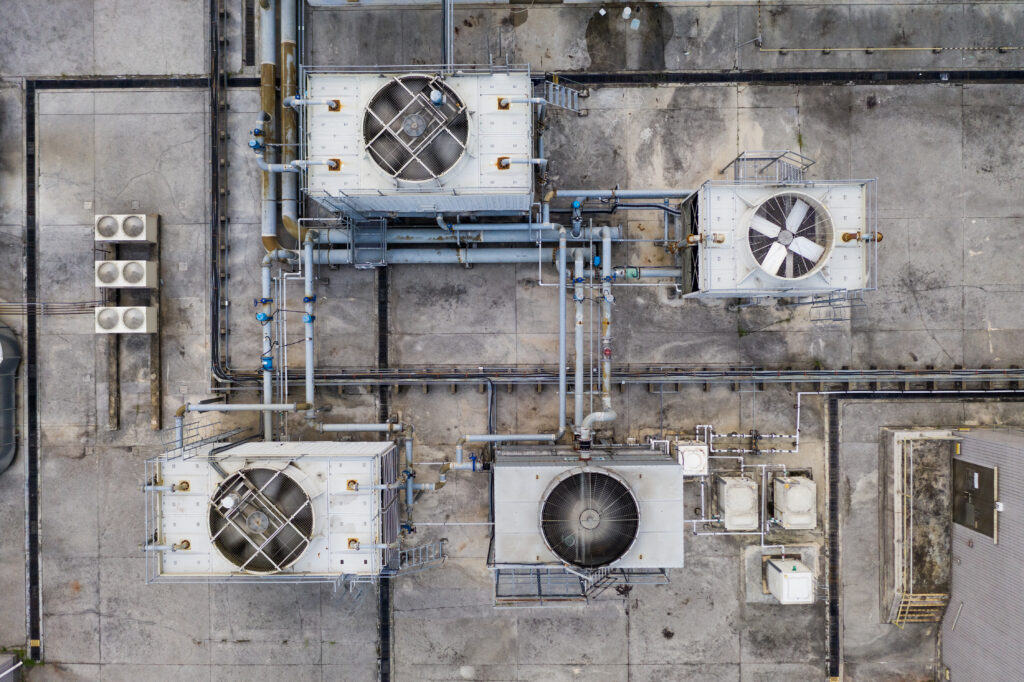
Credit: leungchopan – stock.adobe.com
We’ve noticed 5 common issues with cooling towers and chillers as spring turns to summer.
What lies behind many of these issues is that most buildings with central cooling have antiquated control systems that rely too heavily on manual control adjustments. Parity’s technology automates the operation of central cooling systems, as well as other building systems, to ensure that demand is met without unnecessary energy consumption.
We accomplish this through Parity’s customized control algorithms that use weather data, weather forecasts, system performance indicators, historical operating data, and other inputs to develop optimized control adjustments that are streamed to the associated building systems in real-time.
At Parity, we combine this with alarms and alerts as well as proactive human support from HVAC experts who act as an extension of your building staff. This allows Parity to help building operators prepare for those extra hot days as well as efficiently pinpoint and resolve onsite maintenance issues that can’t be resolved through our remote control.
In addition to the utility cost savings, streamlined operations, and reduced maintenance costs generated, this approach can reduce a building’s exposure to building performance standards such as New York City’s Local Law 97.
Plus, Parity guarantees our utility cost savings or we cut the building a check for the difference.
Contact us now to learn more about how we optimize cooling towers and chillers. You can reach us at contact@paritygo.com.