Zoom. Spotify. Netflix. These are some of the most popular SaaS (Software as a Service) companies.
But have you ever heard of HVAC Optimization as a Service? HVAC optimization is the process of enhancing the efficiency, performance, and cost-effectiveness of heating, ventilation, and air conditioning systems.
Add the “as a Service” model, and you get a subscription-based solution where a company regularly manages and improves your HVAC system’s performance for you.
Using real-time monitoring, automated control adjustments, predictive maintenance, and data analytics, companies can maximize energy savings, comfort, and equipment longevity, typically with no major upfront investment required.
The core of HVAC optimization is automated control adjustments. This means combining real-time data, such as outdoor weather, occupant demand, and inputs from HVAC sensors and thermostats, with algorithms that continuously fine-tune the system.
This means the HVAC system uses energy only when and where it’s needed, avoiding unnecessary heating or cooling.
This delivers three main benefits:
Energy Efficiency: Reducing energy consumption by adjusting performance parameters, upgrading components, or adding more efficient technologies such as variable frequency drives (VFDs). This allows motors serving equipment such as chillers and cooling towers to run at variable speeds rather than at full power at all times.
Performance: Ensuring that HVAC systems operate efficiently and supply meets demand by calibrating controls, adjusting speeds, and reducing operational inefficiency across the cooling system.
Monitoring & Maintenance: Using continuous monitoring to catch issues early, identify failing sensors, and track equipment efficiency over time, preventing small problems from becoming costly repairs and improving overall system reliability.
Learn more about Proactive Maintenance here.
HVAC Optimization as a Service is a new category of energy management, poised to reshape how buildings use energy. It is worth considering providers who combine software, monitoring, and hands-on support, and there’s one company leading the way.
Running a building is demanding enough without micromanaging HVAC performance every day. Parity’s Optimizer takes that job off your team’s plate.
Optimizer is our HVAC Optimization as a Service solution that micromanages your HVAC systems 24/7/365. It’s designed to lower your energy costs, guaranteed. It combines four things:
Our control optimization software is a key piece of Optimizer and our secret sauce. It’s what enables us to save our clients 5- to 6-figure sums on their energy costs.
Without our software, there would be a crucial missing piece in maximizing the efficiency of HVAC systems and hardware components, like VFDs. Our control optimization software makes these systems “smart”, whether or not you have a BMS.
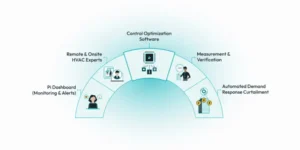
Here’s how it works:
These adjustments are continuously repeated and monitored for performance. If we fall short of projected energy savings, we will cut you a check for the difference.
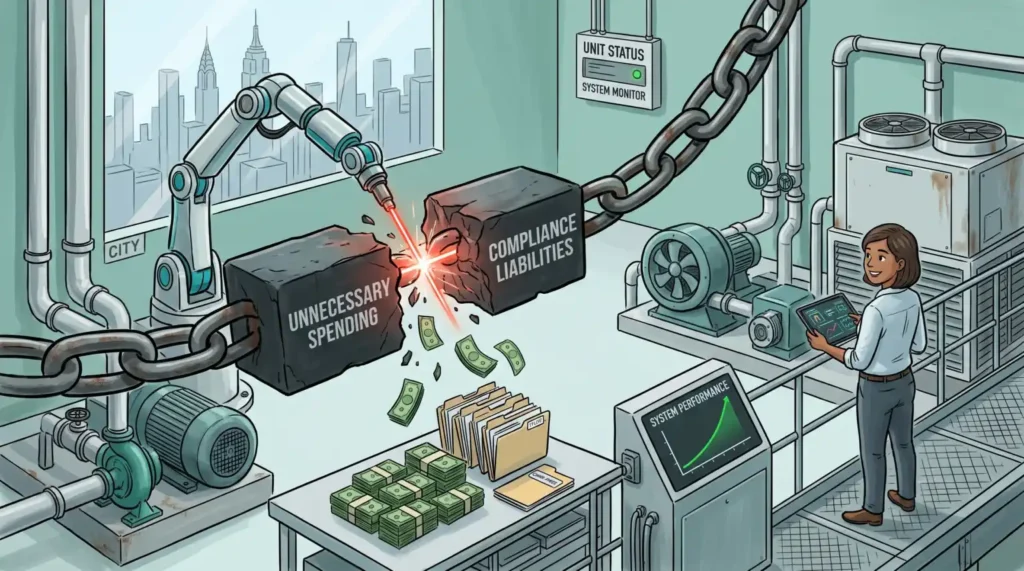
Plus, using less energy means lower CO2 emissions, which can help your building lower its exposure to Local Law 97 (LL97) fines.
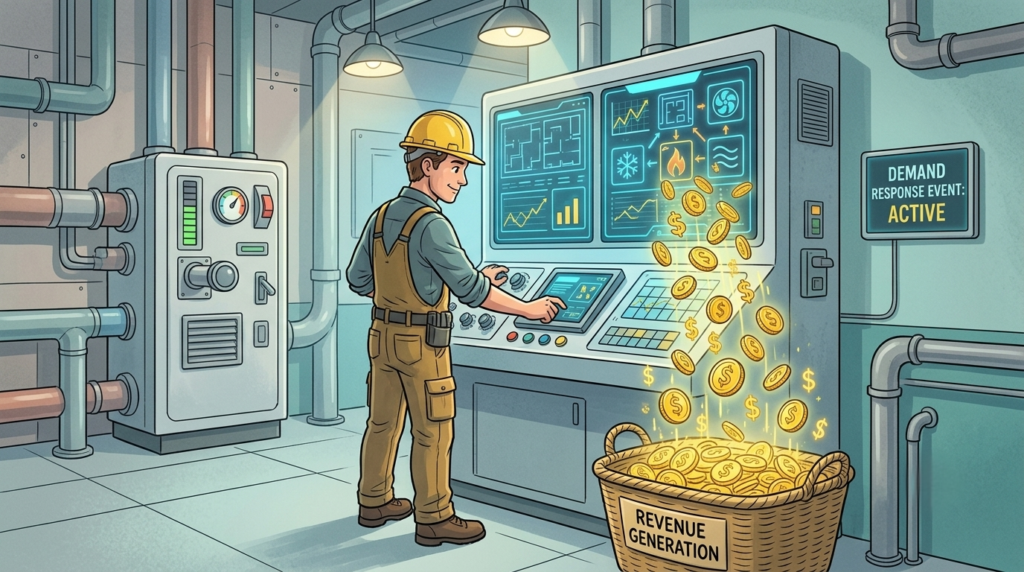
When we manage your HVAC systems, it frees up building staff’s time, reduces service calls, improves energy efficiency, maximizes demand response revenue, and most importantly, saves your building money.
HVAC Optimization as a Service replaces manual, reactive HVAC management with automated, real-time control—driven by weather data, occupant demand, and machine learning. For building owners, that means lower energy costs, reduced staff workload, and longer-lasting equipment, all without a major upfront investment.
Find out how much your building could save.
See how Optimizer helps lower energy costs, improve efficiency, and deliver measurable savings.
Prefer to talk it through first? Email contact@paritygo.com or call 1-833-372-7489. You can also visit our website to learn more about how we reduce energy costs in multifamily residential and hotel buildings.
HVAC system optimization is the process of continuously improving the performance and efficiency of a building’s heating, ventilation, and air conditioning system. By using real-time data, automation, and advanced control strategies, HVAC system optimization reduces energy consumption, lowers operating costs, maintains occupant comfort, and helps extend equipment life.
HVAC Optimization as a Service is a subscription-based solution that continuously manages and optimizes your building’s HVAC system. Instead of relying on manual adjustments or one-time upgrades, the provider uses software, data analytics, and remote expertise to make ongoing control adjustments that improve efficiency, reduce utility costs, and maximize system performance.
Optimizer connects to your building’s HVAC controls or Building Management System (BMS) and continuously analyzes operational data, outdoor weather, and occupancy patterns. Using machine learning and automated control optimization, it adjusts HVAC performance in real time to reduce energy use while maintaining comfortable indoor conditions.
Savings vary depending on the building’s size, equipment, operating schedules, and existing controls. Buildings with inefficient HVAC operations often see significant reductions in energy costs through continuous optimization. Parity guarantees projected energy savings and will cut customers a check if those savings are not achieved.
No. HVAC system optimization works with your existing HVAC equipment and control systems. Rather than replacing equipment, Optimizer improves how your current systems operate, helping you get more value from your existing HVAC investment.
Yes. Optimizer is designed to work with many existing HVAC control systems, whether or not your building already has a Building Management System. Parity’s control optimization software provides intelligent automation that enables HVAC systems to operate more efficiently, regardless of the existing control platform.
Frequent cycling, unnecessary runtime, and inefficient operation can increase wear on HVAC equipment. HVAC system optimization reduces this strain by operating equipment only when needed and under optimal conditions, which can extend equipment lifespan and reduce maintenance issues.
Frequent cycling, unnecessary runtime, and inefficient operation can increase wear on HVAC equipment. HVAC system optimization reduces this strain by operating equipment only when needed and under optimal conditions, which can extend equipment lifespan and reduce maintenance issues.
No. Maintaining occupant comfort is a core objective of HVAC optimization. Optimizer continuously balances indoor temperature, weather conditions, and building demand to reduce energy use while keeping occupants comfortable.
HVAC system optimization is particularly effective for apartments, condos/co-ops, hotels, mixed-use properties, student housing, and other buildings with centralized HVAC systems. Buildings with high energy costs or aging HVAC equipment often have the greatest opportunity for savings.
Yes. By reducing unnecessary energy consumption, HVAC system optimization lowers a building’s greenhouse gas emissions. This can support sustainability goals, improve ESG performance, and help buildings comply with local emissions regulations such as New York City’s Local Law 97 or Boston’s BERDO.
Preventive maintenance focuses on inspecting, cleaning, and repairing HVAC equipment on a scheduled basis. HVAC system optimization continuously adjusts how equipment operates in real time to improve efficiency and performance. The two approaches complement each other, with optimization helping equipment run more efficiently between maintenance visits.
Most buildings with central HVAC systems can benefit from optimization, especially if they have high energy costs, inconsistent comfort, aging controls, or limited staff resources. A building assessment can determine your potential energy savings and estimate the return on investment before implementation.